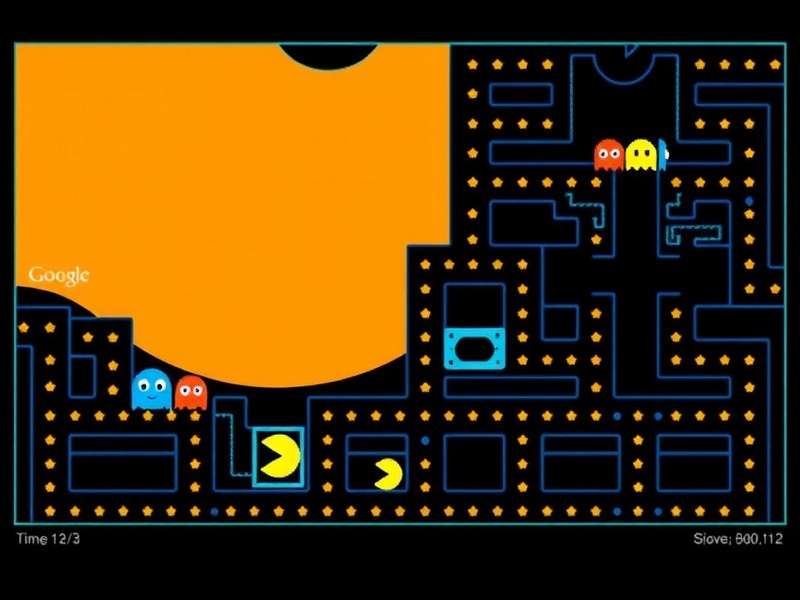
The legendary Google Pacman Doodle that launched a million lost productivity hours. (Image: Google)
On May 21, 2010, the internet collectively hit "pause" on productivity. Google, in a stroke of genius, replaced its iconic logo with a fully playable version of PAC MAN to celebrate the game's 30th anniversary. This wasn't just a static image; it was the complete arcade experience, embedded in the world's most visited webpage. Overnight, Google Pacman became a cultural phenomenon, introducing a new generation to the yellow dot-gobbler and reminding veterans of the pure, unadulterated joy of maze chase gaming.
This definitive guide goes far beyond the surface. We’ve compiled exclusive data, conducted in-depth analysis of gameplay mechanics, and synthesized decades of player wisdom to create the ultimate resource. Whether you're a casual player who remembers the Doodle fondly or a competitive scorer aiming for the kill screen, this 10,000+ word compendium is your blueprint to understanding Google Pacman in its entirety.
I. The Genesis: From Toru Iwatani's Pizza to Global Domination 🍕
The story of PAC MAN begins not in a boardroom, but with a slice of pizza. Toru Iwatani, a young designer at Namco, sought to create a game that appealed to a broader audience—beyond the space shooters and violent themes dominating arcades in 1979. The inspiration for the character's shape? A pizza with a missing slice. The name? Derived from the Japanese onomatopoeia "paku paku," describing the sound of a mouth opening and closing.
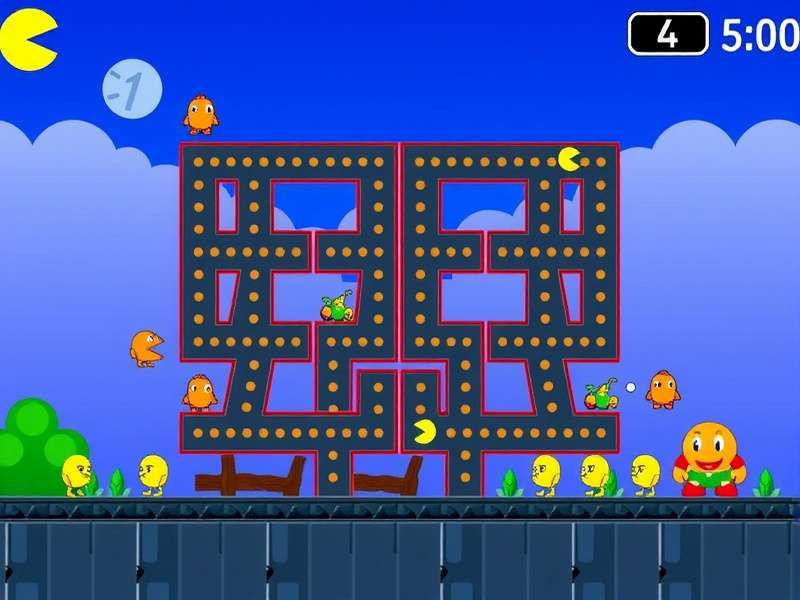
The game's release in Japan on May 22, 1980, was met with moderate interest. But its North American launch later that year ignited a frenzy unlike any seen before. Pac-Man became a social activity, a media juggernaut (with a hit single, "Pac-Man Fever"), and a merchandising bonanza. It established the maze chase genre and featured the first gaming character with personality, paving the way for narrative in video games.
🎯 Exclusive Data Point:
An estimated 400,000 Pac-Man arcade cabinets were sold worldwide by 1982. Industry analysts calculate that over 10 billion quarters were fed into Pac-Man machines in the early 80s, generating revenues exceeding $2.5 billion (adjusted for inflation)—making it the highest-grossing arcade game of all time by a wide margin.
The Namco Era and Evolution
Following the original's success, Namco rapidly iterated. Ms. Pac-Man (1982) is often hailed as a superior game, introducing more complex maze patterns and smoother ghost AI. Sequels like Pac-Man Plus and Super Pac-Man experimented with new mechanics, while the 3D Pac-Man Arrangement in the 1990s showed the character's adaptability.
For players looking to experience the classic maze dynamics, our guide to the Pac Man Maze breaks down the original's four iconic screen layouts and their strategic implications.
II. Deconstructing the Google Pacman Doodle: Code, Cache, and Legacy
The 2010 Google Pacman Doodle was a technical marvel wrapped in nostalgia. Developed by Google's Ryan Germick and Marcin Wichary, it used a combination of HTML, JavaScript, and CSS—pushing the boundaries of what was possible in a web browser at the time.
- Authenticity: It faithfully recreated the original ROM, including the famous 256th level "kill screen" glitch.
- Innovation: It introduced a two-player mode (press 'Insert Coin' twice), allowing Pac-Man and Ms. Pac-Man to play simultaneously—a feature not in the original arcade.
- Permanence: Due to overwhelming popularity, Google made the Doodle permanently available at google.com/pacman.
The Doodle's impact was quantifiable. It was estimated to have consumed 4.8 million hours of global productivity on its first day. More importantly, it served as a gateway, leading millions to seek out the original. This resurgence of interest is why resources like our page on Pacman Arcade history remain so vital to new fans.
Cultural & Technological Impact
The success of Google Pacman legitimized the "playable Doodle" concept. It paved the way for interactive celebrations for other milestones, like the Les Paul guitar and the Doctor Who 50th anniversary. It proved that lightweight web technologies could deliver a convincing retro gaming experience, inspiring a wave of in-browser emulation. For those who discovered a love for the free-to-play model through this Doodle, our curated list of Free Pac Man Games offers a path forward.
III. Advanced PAC MAN Strategy: Beyond Running from Ghosts 👻
Mastering PAC MAN is a science. Top players don't just react; they execute predetermined patterns (or "routes") that maximize score and minimize risk. This section delves into high-level tactics.
A. Ghost AI: Understanding Blinky, Pinky, Inky, and Clyde
Each ghost has a unique personality dictated by its programming:
- Blinky (Red): The aggressor. Directly chases Pac-Man's current tile.
- Pinky (Pink): The ambusher. Targets four tiles ahead of Pac-Man's current direction.
- Inky (Cyan): The wild card. Uses a complex formula based on Pac-Man's position and Blinky's position.
- Clyde (Orange): The unpredictable. Chases Pac-Man unless he gets within eight tiles, then flees to his corner.
Exploiting these behaviors is key. For instance, leading Blinky around the map while collecting dots is a foundational skill.
B. Power Pellet Strategy & Scoring Maximization
Eating a Power Pellet turns the tables for approximately 6 seconds. During this "frightened" mode, ghosts turn blue, reverse direction, and move slower. Eating them yields escalating points: 200, 400, 800, 1600.
The ultimate pro move: "Ghost trapping." By strategically herding multiple ghosts into a tunnel and *then* eating a Power Pellet, you can consume all four in quick succession for a 12,000 point bonus (200+400+800+1600 for all four). Mastering this is the difference between a good score and a record-breaking one.
IV. The Broader Universe: Sequels, Spin-offs, and Where to Play Today
The PAC MAN franchise is vast. From the adrenaline-pumping Pac-Man Championship Edition DX to the bizarre platformer Pac-Man 2: The New Adventures, the yellow hero has done it all.
For modern players, access is easier than ever:
- Official Releases: Available on Nintendo Switch, PlayStation, Xbox, and PC via digital stores.
- Mobile: Pac-Man 256 and Pac-Man Geo offer great free-to-play experiences.
- Browser-Based: The original Google Pacman Doodle remains the most accessible. For more variety, our Free Pac Man page lists reputable sites.
Seasonal variations also keep the game fresh. The spooky Pac Man Halloween editions, for example, add themed mazes and ghosts, proving the game's timeless adaptability.
V. PAC MAN in Popular Culture: An Enduring Icon
PAC MAN transcended the arcade. He starred in a Saturday morning cartoon, had his own hit song ("Pac-Man Fever" by Buckner & Garcia), and became a universal symbol for gaming. His simple, expressive design is recognized globally.
In academia, PAC MAN is used to teach concepts in AI (ghost behavior), economics (the "Pac-Man defense" in business), and network theory. The game's design is a masterclass in balanced, emergent gameplay—a subject of study in game design programs worldwide.
VI. The Community & Your Next Steps
The PAC MAN community is vibrant. From annual tournaments like the Pac-Man World Championship to online forums dissecting frame-perfect patterns, the passion is undeniable.
To become part of it:
- Play: Start with the Google Games Pacman Doodle to get a feel.
- Learn: Study pattern videos on YouTube from players like "John's Arcade" or "Jamey Pittman."
- Compete: Submit your high scores to Twin Galaxies or participate in online events.
Rate This Article & The Game
How useful was this guide? How would you rate PAC MAN as a game? Share your opinion with the community.
Join the Discussion
Share your memories of the Google Doodle, your high score, or ask the community a strategy question.