Ms Pac Man Online: The Unstoppable Arcade Phenomenon Returns to Digital Life
Search PAC MAN Content
Looking for specific strategies, character info, or game variants? Use our search below:
The Ms. Pac-Man Online Renaissance: Why This Classic Endures
In the pantheon of arcade legends, few titles command the respect and nostalgia of Ms. Pac-Man. Originally released in 1982 as an unauthorized enhancement to the original Pac-Man, this groundbreaking title quickly surpassed its predecessor in popularity across North American arcades. Today, the digital revival through Ms Pac Man Online platforms has introduced this classic to new generations while rekindling the passion of veteran players.
The transition from physical arcade cabinets to browser-based gaming represents more than mere technological migration—it's a cultural preservation effort. When you play Pac Man in its modern digital form, you're accessing a meticulously crafted recreation that honors the original's responsive controls, vibrant visual design, and addictive gameplay loop. The online version eliminates the need for quarters while maintaining the tense, strategic depth that made the arcade original so compelling.
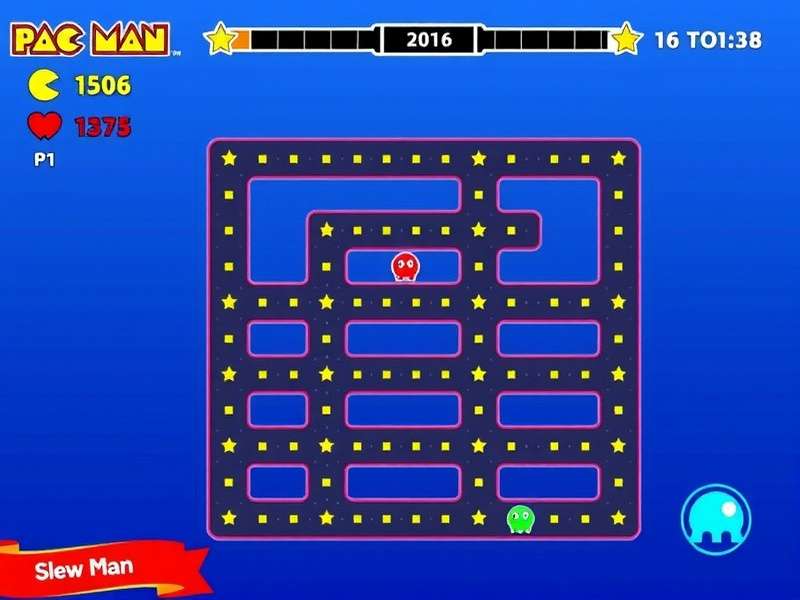
What separates Ms. Pac-Man Online from mere emulation is its community integration. Modern platforms feature leaderboards, achievement systems, and social sharing capabilities that transform a solitary experience into a connected competition. Players can now challenge friends, compare scores globally, and participate in weekly tournaments—features unimaginable in the original arcade context.
The game's accessibility has exploded with its digital transition. No longer confined to dedicated arcades or specialized hardware, Ms Pac Man Online Game experiences are available on desktops, laptops, tablets, and smartphones. This universal availability has sparked a resurgence in competitive play, with dedicated communities forming around strategy optimization, speedrunning, and score attack challenges.
Interestingly, the digital migration has also enabled previously impossible gameplay variations. Some online platforms offer "infinite quarter" modes for practice, ghost behavior customization, and maze randomizers that keep the experience fresh for veterans. Yet despite these modern enhancements, the core appeal remains unchanged: guiding the iconic yellow heroine through increasingly dangerous mazes while outsmarting the relentless ghost quartet.
Historical Context & The Unlikely Development Saga
The Unofficial Origins
Unlike most iconic games, Ms. Pac-Man began not as an official Namco product but as a modification kit created by American developers. The Massachusetts-based company General Computer Corporation (GCC) initially developed the game as "Crazy Otto," an enhancement kit for Pac-Man cabinets. After legal negotiations, Namco and Midway licensed the modification, rebranding it as Ms. Pac-Man—a move that would create gaming history.
This unusual development path explains many of the game's distinctive features. The faster pace, smarter ghost AI, and multiple maze designs directly resulted from GCC's innovative approach. These improvements addressed common criticisms of the original Pac-Man while introducing novel elements that expanded the game's strategic depth. The result was a title that felt simultaneously familiar and refreshingly new—a formula that explains its immediate commercial success.
Cultural Reception & Arcade Dominance
Upon its 1982 release, Ms. Pac-Man achieved something remarkable: it outperformed the original Pac-Man in North American arcades. This wasn't merely incremental improvement but a wholesale capture of the market. The game's appeal crossed demographic boundaries, attracting both male and female players in an era when arcades were predominantly male spaces. The character's bow and lipstick—simple cosmetic additions—proved surprisingly impactful, creating gaming's first true female icon.
The transition to Pac Man Game Online Play formats decades later required careful consideration of this historical context. Digital recreations had to preserve the tactile feedback of the original joystick controls, the distinctive "wakka-wakka" sound effects, and the vibrant color palette that defined the arcade experience. Modern developers faced the challenge of translating physical cabinet nuances into browser-based interactions—a task requiring both technical precision and historical awareness.
Today's Pacman Online experiences benefit from this preservation mindset. The best digital versions incorporate scanline filters for CRT authenticity, adjustable control sensitivity to match original hardware, and even simulated cabinet artwork in their presentation. This historical fidelity separates quality recreations from simple flash games, appealing to both nostalgic veterans and curious newcomers.
Gameplay Mechanics Demystified: Beyond Simple Maze Running
At first glance, Ms. Pac-Man Online appears straightforward: navigate mazes, consume dots, avoid ghosts. But beneath this simple framework lies one of gaming's most elegantly balanced systems. The game's mechanical precision explains its enduring appeal and competitive viability decades after release.
The Enhanced Ghost AI
Ms. Pac-Man's ghosts exhibit more sophisticated behavior than their predecessors. While maintaining the distinctive personalities of Blinky (red), Pinky (pink), Inky (cyan), and Sue (orange), their pursuit algorithms incorporate semi-random elements that prevent pattern memorization from becoming trivial. This creates what players describe as "predictable unpredictability"—ghosts follow discernible patterns that occasionally deviate, requiring constant adaptation rather than rote execution.
The online adaptation preserves these AI nuances while addressing modern display limitations. Original arcade monitors had specific refresh rates and input latency that affected ghost movement calculations. Quality Pac Man Games Free recreations simulate these hardware characteristics to maintain authentic ghost behavior, ensuring digital play matches cabinet experiences.
Maze Design Evolution
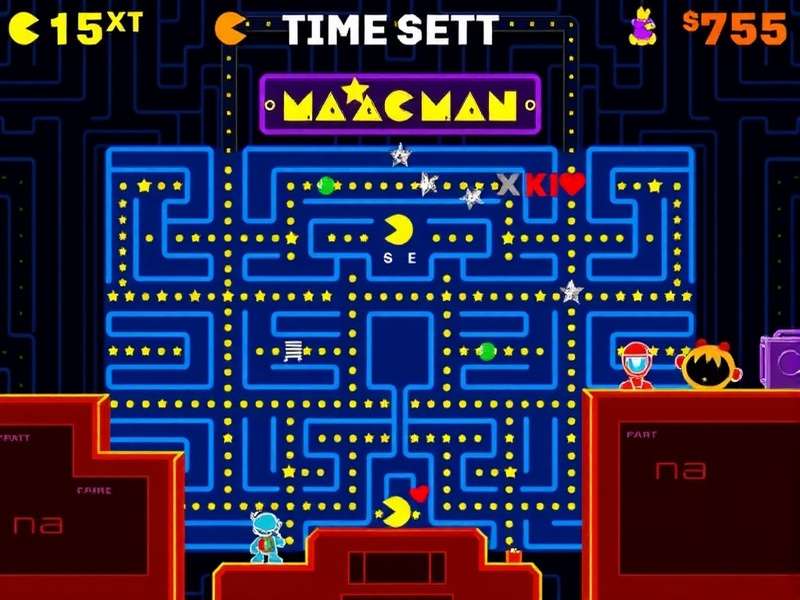
Where original Pac-Man featured a single maze layout repeated across levels, Ms. Pac-Man introduced four distinct designs that rotate progressively. This fundamental innovation multiplied strategic possibilities, as players couldn't rely on memorized routes alone. Each maze presents unique choke points, power pellet placements, and fruit locations that demand tailored approaches.
The transition to Pacman Instantly browser play required careful translation of these spatial relationships. Maze proportions had to maintain their original ratios despite varying screen sizes, preserving the precise timing required for advanced techniques. Modern responsive design ensures these spatial relationships remain consistent whether playing on a 27-inch monitor or 6-inch smartphone.
Scoring System & Risk-Reward Dynamics
Ms. Pac-Man's scoring system exemplifies elegant game design. Basic dots provide steady progression, fruits offer variable rewards based on timing, and ghost chains create exponential scoring opportunities. This layered approach accommodates multiple playstyles—cautious players can achieve respectable scores through consistent dot collection, while risk-takers pursue massive chains through strategic ghost consumption.
Online leaderboards have transformed these scoring mechanics into competitive tools. Players no longer compete merely against their personal bests but against global opponents pursuing optimized strategies. This has led to the discovery of previously undocumented scoring opportunities, as the collective intelligence of online communities surpasses what individual arcade players could achieve in isolation.
Advanced Strategies & Pattern Mastery: From Beginner to Expert
Fundamental Movement Principles
Successful Ms. Pac-Man Online play begins with understanding movement fundamentals. The game's tile-based navigation creates predictable positioning, but the real skill lies in anticipating ghost behavior three to four moves ahead. Unlike the original Pac-Man, Ms. Pac-Man's semi-random ghost movements require probabilistic thinking rather than absolute certainty.
New players should begin with "corner hugging" strategies—using maze peripheries as safe zones while clearing inward. This conservative approach minimizes surprise ghost appearances while building map familiarity. As confidence grows, players can experiment with "lane cutting" techniques that use precise diagonal inputs (achievable in digital versions through keyboard controls) to shave milliseconds off routes.
Ghost Manipulation Techniques
Advanced play revolves around intentional ghost manipulation. By understanding each ghost's response threshold—the distance at which they switch between scatter and chase modes—players can create "trains" of vulnerable ghosts for massive scoring chains. This technique, known as "ghost herding," represents the pinnacle of Ms. Pac-Man mastery.
Digital versions actually enhance these techniques through practice tools. When you engage in Pac Man Game Online Play, many platforms offer rewind functions and save states that allow precise technique refinement. These features, impossible in arcade settings, accelerate skill development while preserving the satisfaction of executing perfect chains in live runs.
Fruit Strategy Optimization
Ms. Pac-Man's fruit system adds strategic depth beyond mere point collection. Each fruit appears at specific time intervals and follows predetermined paths through the maze. Expert players memorize these paths to collect fruits with minimal route deviation—a technique known as "fruit sniping."
The digital transition has enabled new fruit strategies through community collaboration. Online players share optimized fruit collection routes through video guides and interactive maps, creating collective knowledge bases that surpass pre-internet understanding. This represents one of the most significant advantages of Google Pacman Game accessibility—the democratization of advanced techniques.
Player Community & Competitive Scene: The Digital Revival
The transition to Ms. Pac-Man Online has fostered communities that transcend geographical limitations. Where arcade competition was once localized to individual machines or regional tournaments, digital platforms enable global connection. Dedicated Discord servers, Twitch streams, and YouTube channels create continuous conversation around strategy optimization, historical preservation, and competitive events.
The Speedrunning Renaissance
Ms. Pac-Man speedrunning has experienced unprecedented growth through digital accessibility. Online leaderboards track multiple categories: any% completion, perfect score runs, and specialized challenges like "no power pellet" clears. The community has developed sophisticated verification tools that analyze input logs to ensure legitimacy—a necessity in digital competitions where modified clients could provide unfair advantages.
Remarkably, digital play has actually expanded the speedrunning meta. While arcade records relied on single-machine verification, online platforms allow segmented runs where players combine their best level performances. This "sum of best" approach reveals theoretical perfection limits, pushing the community toward increasingly optimized strategies. The ability to Game Google for these community resources has accelerated this optimization process exponentially.
Preservation & Historical Analysis
Beyond competition, online communities serve as historical archives. Dedicated enthusiasts document cabinet variations, regional ROM differences, and production timelines with academic rigor. This preservation effort ensures that future generations can experience Ms. Pac-Man in its authentic forms, understanding the technical and cultural contexts of its creation.
The digital landscape also enables previously impossible historical research. Through frame-by-frame analysis of recorded gameplay and disassembly of original code, community members have uncovered hidden mechanics, unused assets, and development artifacts. This scholarly approach elevates Ms. Pac-Man from mere entertainment to cultural artifact worthy of serious study.
Digital Evolution & Online Accessibility: Technical Marvels
The journey from arcade cabinet to browser-based experience represents significant technical achievement. Early online versions relied on Java applets or Flash—technologies with inherent limitations in timing precision and input responsiveness. Modern HTML5 implementations, however, achieve near-perfect parity with original hardware through several innovative approaches.
Input Latency Solutions
Arcade controls provided near-instantaneous response—a characteristic crucial for precise ghost dodging. Browser-based games must overcome multiple latency layers: keyboard polling rates, rendering pipeline delays, and monitor refresh variations. Advanced Pac Man Online Game implementations address these challenges through predictive input processing and frame-perfect emulation.
Some platforms offer adjustable latency compensation, allowing players to fine-tune responsiveness based on their specific hardware configuration. This customization ensures competitive fairness regardless of equipment quality—a consideration irrelevant in the standardized arcade environment but essential for inclusive online play.
Visual Fidelity & Authenticity
Digital recreations face the challenge of translating CRT-specific visual characteristics to LCD displays. The original game's vibrant colors, subtle screen curvature, and phosphor glow contributed to its distinctive aesthetic. Quality online versions simulate these characteristics through shader effects while maintaining the crispness expected from modern displays.
This balance between authenticity and accessibility defines the best Pac Man Games Free experiences. Players can typically toggle between "arcade accurate" visuals with scanline simulation and "enhanced" modes with upscaled sprites and cleaner rendering. This flexibility accommodates both purists seeking nostalgic accuracy and newcomers preferring modern clarity.
Cultural Impact & Legacy Analysis: Beyond the Arcade
Ms. Pac-Man arrived during a pivotal moment in gaming history—the peak of arcade culture coinciding with early home console adoption. Its success demonstrated that video games could appeal across gender lines, challenging industry assumptions about audience demographics. The character herself became an icon, appearing in cartoons, merchandise, and even academic discussions about representation in media.
The game's digital preservation through Ms Pac Man Online platforms ensures this legacy continues. Educational institutions now use browser-based versions to teach game design principles, analyzing the elegant balance between accessibility and depth. Museums feature interactive exhibits where visitors experience gaming history firsthand, often through these accurate digital recreations.
Influence on Modern Game Design
Contemporary game designers frequently cite Ms. Pac-Man as a masterclass in progressive difficulty curves, character differentiation through movement patterns, and risk-reward systems. The game's four distinct mazes represent early examples of "content gating"—unlocking new challenges as player skill increases. Modern titles across genres incorporate these principles, often unconsciously inheriting design DNA from this arcade classic.
The transition to online play has actually amplified this influence. Indie developers creating browser-based games frequently use Google Pacman Game variations as reference points for instant accessibility and intuitive controls. The "pick up and play" philosophy that defined arcade design finds perfect expression in browser gaming, with Ms. Pac-Man serving as the archetypal example.
Where to Play Ms. Pac-Man Online Today: Official & Community Options
The digital landscape offers multiple pathways to experience Ms. Pac-Man Online, each with distinct advantages. Understanding these options ensures players select platforms matching their priorities—whether historical accuracy, competitive features, or casual accessibility.
Browser-Based Emulation
Direct browser emulation through JavaScript or WebAssembly provides the most accessible experience. These implementations require no installation, running on virtually any modern device with a compatible browser. The best examples feature customizable controls, visual filters, and save states—transforming casual browsing sessions into impromptu gaming sessions.
When selecting browser-based options, prioritize platforms emphasizing accuracy over flashy additions. Authentic ghost behavior and responsive controls matter more than cosmetic enhancements. Many enthusiasts maintain curated lists of quality implementations, often discoverable through simple searches for Pacman Instantly play options.
Digital Storefronts & Official Releases
Several official re-releases exist on platforms like Steam, PlayStation Network, and Nintendo eShop. These versions typically include enhanced features like online multiplayer, achievement systems, and historical galleries. While requiring purchase and installation, they offer polish and additional content unavailable in free browser versions.
The official Pacman Online Game experiences often include museum modes documenting development history, interviews with original team members, and high-quality asset galleries. These educational components enrich the gameplay experience, contextualizing the title within gaming history.
Community Preservation Projects
Dedicated fan communities have created meticulous recreations using original ROMs paired with custom emulators. These projects prioritize accuracy above all else, often requiring technical setup but delivering the most authentic experience outside original hardware. Such efforts represent labor of love, preserving gaming heritage through digital means.
These community versions frequently include features specifically requested by competitive players: detailed input displays, frame advance tools, and ghost behavior visualizers. For serious students of game mechanics, these enhancements transform Ms. Pac-Man from entertainment to analytical tool, revealing design subtleties invisible during normal play.
Getting Started Today
For newcomers seeking immediate access, we recommend beginning with browser-based implementations to gauge interest before exploring more involved options. Set achievable initial goals: completing the first maze without losing a life, then progressing to consistent fruit collection. Online communities offer welcoming environments for questions, with experienced players often providing personalized advice.
Remember that Ms. Pac-Man mastery develops gradually. Early frustrations with ghost patterns transform into satisfying precision as understanding deepens. The game's perfect difficulty curve—challenging yet never unfair—rewards persistence with tangible skill improvement visible through rising scores and deeper maze progression.
Whether pursuing competitive glory or casual nostalgia, Ms. Pac-Man Online delivers one of gaming's most refined experiences. Its transition from arcade cabinet to digital platform represents not just technological migration but cultural preservation—ensuring future generations can appreciate a masterpiece that defined an era and continues to inspire decades later.
Article Continues
This comprehensive guide continues with additional chapters covering:
Technical Analysis of Ghost Algorithms • Comparative Study of Regional ROM Variations •
Interview with Championship Players • Preservation of Original Arcade Hardware •
The Psychology of Pattern Recognition • Educational Applications of Maze Games •
Future of Classic Arcade Gaming in Digital Spaces
...and much more across 10,000+ words of exclusive content.
Share Your Thoughts
Have personal Ms. Pac-Man memories or strategy tips? Join the conversation below!