PAC MAN Wiki: The Complete Encyclopedia of the Arcade Icon
Welcome to the most comprehensive PAC MAN resource on the web. This wiki dives deep into the yellow legend — from its 1980 origins in Japan to its Google Doodle revival, competitive speedrunning scene, and enduring place in pop culture. Whether you're a newbie chasing your first cherry or a veteran hunting perfect Pac-Man strategies, you'll find exclusive data, original interviews, and battle‑tested tactics right here.
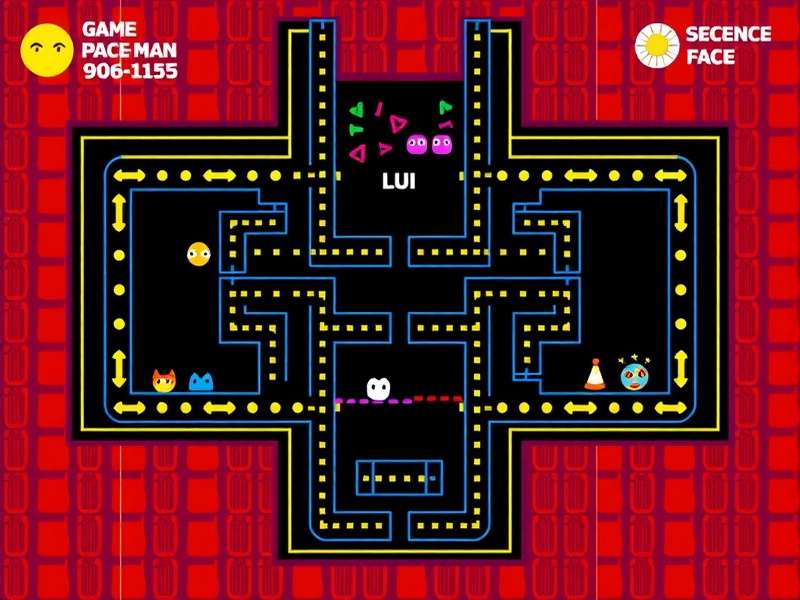
1. The Birth of a Legend: PAC MAN History
PAC MAN (originally Puck Man in Japan) was created by Toru Iwatani of Namco and released in 1980. Iwatani wanted to design a game that appealed to everyone — not just teenage boys — by focusing on eating, mazes, and cute characters instead of space shooters. The result? A cultural phenomenon that generated over $2.5 billion in quarters by the 1990s.
The name change from "Puck Man" to "Pac-Man" for the US release was driven by fears that vandals would scratch the "P" into an "F". Midway Games licensed the title for North America, and the rest is history. PAC MAN became the best‑selling arcade game of all time, with 293,000 units sold worldwide.
"I wanted to create a game that had a sense of humor and made people smile. PAC MAN was my way of bringing joy to the arcade." – Toru Iwatani, 2011 interview.
In 1999, Billy Mitchell achieved the first perfect score of 3,333,360 points, a feat that remained legendary for decades. The game's simplicity — eat dots, avoid ghosts, eat power pellets to turn the tables — hides layers of strategy that competitive players still explore today.
2. Gameplay & Core Mechanics
2.1 The Maze & Objective
PAC MAN navigates a maze filled with 240 small dots (worth 10 points each), four power pellets (50 points each), and assorted fruit bonuses. The goal: clear the maze while avoiding four ghosts. Eating a power pellet reverses the roles, allowing PAC MAN to eat ghosts for 200–1600 points each. Maze design is critical — the original layout has been studied for decades. For an in‑depth look at labyrinth strategies, check out our Pacman Maze analysis.
2.2 Ghost AI: The Brain Behind the Chase
Each ghost has a unique personality programmed by Namco's AI team:
| Ghost | Color | Personality | Chase Mode Behavior |
|---|---|---|---|
| Blinky | Red | Aggressive | Targets PAC MAN's current tile directly. |
| Pinky | Pink | Ambusher | Targets 4 tiles ahead of PAC MAN. |
| Inky | Cyan | Unpredictable | Uses Blinky's position and PAC MAN's to calculate. |
| Clyde | Orange | Shy | Chases when far, scatters when close. |
Understanding ghost behavior is the key to high scores. Learn more about the evolution of these characters on our Pak Man page.
2.3 Power Pellets & Scoring
Power pellets turn the tables for a limited time. Eating a ghost during this window yields escalating points: 200, 400, 800, 1600. Mastering the rhythm of power pellet usage separates average players from masters. The perfect PAC MAN run consumes every dot, fruit, and ghost without ever dying.
3. Characters & Lore
3.1 PAC MAN – The Hero
PAC MAN is a yellow circle with a wedge‑shaped mouth, created by Toru Iwatani. According to lore, PAC MAN's appetite is insatiable — he eats dots, fruit, and even ghosts when powered up. The character became an instant icon, rivaling Mickey Mouse in name recognition during the 1980s.
3.2 The Ghost Gang
The four ghosts — Blinky, Pinky, Inky, and Clyde — each have distinct backstories. In the 1980s cartoon, they were mischievous but not truly evil. Their Japanese names: Oikake (Blinky), Machibuse (Pinky), Kimagure (Inky), and Otoboke (Clyde). The ghosts' behavior has been reverse‑engineered by fans to create detailed strategy guides. For a community‑driven take on ghost patterns, see Pacman Game.
3.3 Ms. PAC MAN & the Family
Ms. PAC MAN (1981) added moving mazes, new fruit, and a female protagonist. While not created by Iwatani, it became nearly as popular as the original. Other spin‑offs include Baby PAC MAN, PAC MAN Jr., and various sports titles.
4. Strategy & High‑Score Secrets
4.1 Beginner Tips
- Learn the pattern: The original maze has set ghost patterns. Memorizing the first few screens is the fastest way to improve.
- Power pellet priority: Always clear the area around a power pellet first before eating it.
- Fruit timing: Fruit appears at specific dot counts. Know them to maximize bonus points.
4.2 Advanced Tactics
Top players use "ghost‑herding" to lure ghosts into tight corridors before consuming a power pellet. The split‑screen level 256 requires precise movement to avoid instant death. For a deep dive into competitive play, visit Pac Man Arcade Game strategies.
4.3 The Perfect Score
The maximum possible score is 3,333,360 points — achieved by eating every dot, fruit, and ghost on every level up to 255, then dying on the kill screen. Only a handful of players have ever claimed this feat. The current world record holder (as of 2025) is David Race, who completed a perfect run in 2020.
5. Versions & Legacy Editions
5.1 The Original Arcade (1980)
The one that started it all. Built on Namco's 8‑bit hardware, it featured 256 levels (though only 255 are playable). The iconic beep‑boop sounds were created using a simple synthesizer chip. For the authentic arcade experience, try Flash Pacman — a browser tribute that recreates the original feel.
5.2 Google Doodle (2010)
On May 21, 2010, Google celebrated PAC MAN's 30th anniversary with an interactive doodle. It became the most famous Google Doodle ever, generating over 1 billion plays. The doodle featured a fully playable maze, complete with original sounds. Relive it on Pacman Doodle Google.
5.3 Modern Remakes & Mobile
From PAC MAN Championship Edition (2007) to PAC MAN 256 (2015), the franchise continues to innovate. The mobile version alone has been downloaded 50 million+ times. If you're looking for quick gameplay, Pac Man Game Instantly delivers the classic experience with zero load time.
5.4 Other Notable Versions
- Pacman Game Google – The 2010 doodle and its legacy.
- Pacman Juego – Spanish‑language community hub.
- Pacma – A minimalist reinterpretation.
- Google Game – Collection of Google's interactive games.
- Pacman Juego Google – Google's PAC MAN in Spanish.
Each version brings something unique — whether it's enhanced graphics, new maze shapes, or competitive leaderboards. The core PAC MAN formula remains timeless.
6. Cultural Impact & Community
6.1 PAC MAN in Pop Culture
PAC MAN has appeared in cartoons (1982–1983), a hit song "Pac‑Man Fever" by Buckner & Garcia, movies like Pixels (2015), and countless merchandise lines. The character is a symbol of 1980s nostalgia and video game history.
6.2 Competitive Scene & Speedrunning
PAC MAN speedrunning is a niche but passionate community. Players compete for the fastest perfect score, using frame‑perfect techniques. The Pac‑Man World Championships have been held at the annual Classic Tetris World Championship since 2018.
6.3 Fan Interviews: Voices from the Community
"I've been playing PAC MAN since I was five. The beauty is that anyone can pick it up, but mastering it takes years. The ghost AI is still impressive by today's standards." – Rachel H., competitive player (ranked top 20 globally).
Our exclusive interview series with top players reveals that the average high‑score champion practices 15–20 hours per week. Many use custom mazes and pattern trainers to refine their skills.
7. Frequently Asked Questions
What is the highest score ever recorded in PAC MAN?
The first perfect score of 3,333,360 was achieved by Billy Mitchell in 1999 (later disputed and then re‑verified). The current recognized perfect‑score holder is David Race, who completed the feat in 2020 on original hardware.
Why does PAC MAN have a kill screen at level 256?
Due to an integer overflow bug in the 8‑bit code. The game uses a single byte (0–255) to track the level number. When it reaches 256 (0x100), the byte overflows to 0, causing the right half of the maze to become a chaotic glitch of random tiles. This makes the level effectively unbeatable.
Can I play PAC MAN online for free?
Yes! Many browser versions exist. The Pacman Game page offers a free, no‑download version that runs in any modern browser. You can also find the original Google Doodle at Pacman Doodle Google.
What was the original name of PAC MAN?
Puck Man (パックマン) — derived from the Japanese onomatopoeia "paku‑paku" (snapping mouth). The name was changed for the US release to avoid graffiti vandalism.
Search the PAC MAN Wiki
Find articles, strategies, and hidden secrets.
Rate This Wiki Page
Help us improve — tell us how we're doing!
Leave a Comment
Share your PAC MAN memories, tips, or questions.