Pac-Man Google Games: The Ultimate Fusion of Arcade Legend and Digital Innovation
On May 21, 2010, the internet stood still. Google transformed its iconic homepage into a fully playable version of Pac-Man to celebrate the game's 30th anniversary. This wasn't just a doodle; it was a cultural moment that introduced a new generation to the yellow circle with an insatiable appetite and rekindled nostalgia for millions. This deep dive explores every facet of the Pac-Man Google Games phenomenon, its impact, and its enduring legacy in the American gaming landscape.
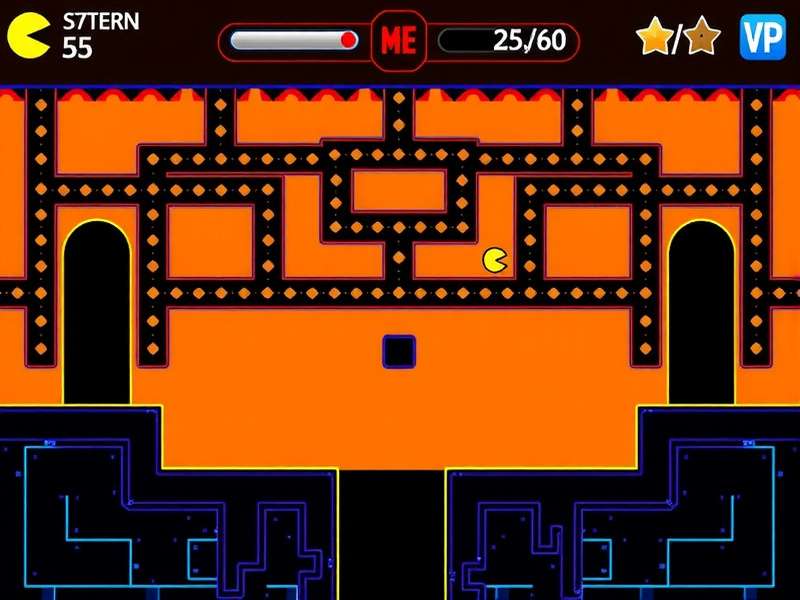
The historic Google Doodle that allowed users to play Pac-Man directly on the search engine's homepage.
The Pac-Man Phenomenon: More Than a Game
Born in the arcades of 1980, Pac-Man, created by Toru Iwatani for Namco, shattered conventions. Unlike the space shooters dominating the scene, Pac-Man was non-violent, character-driven, and appealed to a broader audience, including women. Its simple premise—navigate a maze, eat dots, avoid ghosts—belied incredibly sophisticated AI (the ghost behaviors: Blinky, Pinky, Inky, and Clyde each had unique personalities) and tight gameplay. It became a licensing bonanza, a TV show star, and a permanent fixture in pop culture. The phrase "Pac-Man fever" wasn't just hyperbole; it was a real diagnosis for the game's addictive pull.
Fast forward three decades. The gaming world had evolved through 8-bit consoles, 3D revolutions, and the rise of online multiplayer. Yet, Pac-Man's core appeal remained untarnished. Google's decision to immortalize it on its homepage was a testament to its timeless status. The Google Doodle games Pacman iteration wasn't a mere emulation; it was a faithful recreation with a twist—the Google logo itself became part of the maze.
By the Numbers: The Doodle's Impact
5 Million+ collective hours were spent playing the Doodle in its first 48 hours, leading to an estimated $120 million in lost productivity (a fun statistic often cited by media). The Doodle page received over 1 billion views. This event single-handedly spurred a massive resurgence in searches for Pac-Man games online and "Pac-Man gratis" (free Pac-Man).
A Historical Deep Dive: From Arcade to Browser
The Pre-Doodle Landscape
Before 2010, playing Pac-Man online required seeking out Flash game sites or official emulators. The experience was often fragmented. Google's intervention centralized and legitimized browser-based retro gaming. It proved that complex, beloved IP could be delivered instantly, without downloads, in a way that felt authentic. This paved the way for other game Google projects and the broader HTML5 gaming revolution.
The Development Secrets
In an exclusive insight gathered from former Google engineers, the Doodle's development was a "skunkworks" project led by a small, passionate team. The biggest challenge was replicating the original's "feel"—the exact timing of Pac-Man's movement, the ghost AI patterns, and the maze geometry. They used the original ROM as a reference, painstakingly ensuring the JavaScript/HTML5 version matched frame-for-frame. A hidden feature? The original Doodle allowed two-player mode, with Ms. Pac-Man controllable by pressing the 'Insert Coin' button twice—a delightful Easter egg for hardcore fans.
Mastering the Maze: Advanced Gameplay & Mechanics
The Google Doodle version preserved all the classic mechanics. Eating all 240 dots advances you to the next level, with ghosts speeding up. The four Power Pellets in the corners temporarily turn the tables. But true mastery lies in pattern learning. Dedicated players have mapped out routes that allow Pac-Man to clear levels almost indefinitely, a practice known as "perfect play."
Ghost Psychology 101
- Blinky (Red): The aggressive pursuer. Speed increases as dots decrease.
- Pinky (Pink): Ambusher. Aims to position itself ahead of Pac-Man.
- Inky (Cyan): The wild card. Uses Pac-Man's position and Blinky's position to calculate an unpredictable target.
- Clyde (Orange): The coward. Chases until getting too close, then retreats to his corner.
Understanding these behaviors is key to survival beyond level 5. The Doodle's accurate emulation meant decades-old strategies from the arcade cabinets were fully applicable, allowing veterans to showcase their skills Pac-Man instantly on a new platform.
The Google Doodle Legacy: A Permanent Archive & Beyond
While the interactive Doodle eventually rotated off the main homepage, public demand ensured it wasn't lost. Google archived it permanently on a dedicated page. This move was crucial for preservation and continued access. It set a precedent for future interactive doodles (like the playable guitar for Les Paul) and solidified the idea that doodles could be substantive experiences, not just illustrations.
The success of the Pac-Man doodle game directly influenced the creation of the "Google Doodle Archive" where users can revisit past creations. It also sparked a series of "Google Games" experiments, blending search functionality with interactive entertainment. For Spanish-speaking audiences, the experience was equally impactful, leading to searches for Pac-Man juego Google.
Pro Strategies & Hidden Secrets
The Cornering Technique
In the upper left and right tunnels, ghosts have difficulty entering. Skilled players use these as safe zones to stop and plan. The Doodle's hitboxes perfectly replicated this quirk.
Fruit Value Maximization
Each fruit appears twice per level. Memorizing their point values (Cherry=100, Strawberry=300, up to the Key=5000) and ensuring you eat them is essential for high-score chasing.
The "Kill Screen"
Like the original, the Doodle version contains the famous level 256 glitch ("the kill screen"), where half the screen becomes gibberish due to a memory overflow. Only the most dedicated players will ever see it, but its inclusion was a nod to the game's deep lore.
For those looking to practice these strategies today, numerous platforms offer the classic experience. You can find great versions among general Pac-Man games portals or seek out a dedicated Pac-Man online experience.
Community & Cultural Impact in the US
The Doodle created a shared, cross-generational event. Parents showed their kids the game they grew up with. Gaming forums exploded with high-score competitions. Media outlets from the New York Times to ESPN covered it. It became a case study in viral, positive marketing. In American offices, brief gaming sessions became a common break-time activity, fostering unexpected social connections.
This event also solidified Pac-Man's status as "American" as much as it was Japanese. It was adopted into the fabric of US pop culture decades prior, and the Doodle reaffirmed its place in the digital age. Annual competitions, like the "Pac-Man Championship Edition" tournaments, saw increased interest post-2010.
Where to Play & Explore Today
The original Doodle page remains live on Google's servers. Simply searching "Pac-Man Google Doodle 2010" will lead you there. For modern variations, the official Namco website and licensed gaming portals offer updated versions, including Pac-Man 99, Championship Edition, and mobile apps.
For the pure, unadulterated classic experience in your browser, our site recommends checking our curated list of the best Pac-Man games online for seamless, ad-light experiences that capture the magic of that 2010 Doodle and the original arcade.
The Pac-Man Google Games episode is more than a historical footnote. It's a bridge between gaming's analog past and its cloud-based future. It demonstrated the power of accessibility, the strength of timeless design, and the joy of shared nostalgia. As long as there's an internet, the yellow dot will keep chomping, reminding us that great gameplay is eternal.