PAC MAN isn’t just a game — it’s a cultural touchstone. Since its debut in 1980 by Namco (now Bandai Namco Entertainment), the yellow, pizza-shaped hero has gobbled its way into the hearts of millions across the globe. Whether you’re a seasoned veteran chasing perfect runs or a newcomer discovering the maze for the first time, this guide delivers exclusive insights, pro-level strategies, and rare behind-the-scenes stories you won’t find anywhere else.
Welcome to the most comprehensive Pac-man resource on the web, crafted by dedicated fans for the PAC MAN community. We’ve aggregated data from competitive tournaments, interviewed top players, and analyzed every pixel of the original arcade ROM to bring you content that goes way beyond the average wiki.
Ready to power up? Let’s dive into the maze. 🟡👻
📜 The History of PAC MAN
The Birth of a Legend (1980)
In 1980, a young Japanese designer named Toru Iwatani set out to create a game that would appeal to a broader audience — including women and couples — at a time when arcades were dominated by space shooters and violent themes. Inspired by a missing slice of pizza, Iwatani sketched a simple yellow circle with a wedge-shaped mouth. PAC MAN was born.
The original Japanese name was Puck Man (パックマン), derived from the onomatopoeic phrase paku paku (the sound of eating). When the game was brought to the United States by Midway, it was rebranded to Pac-Man to prevent vandals from altering the letter "P" to an "F" on arcade cabinets.
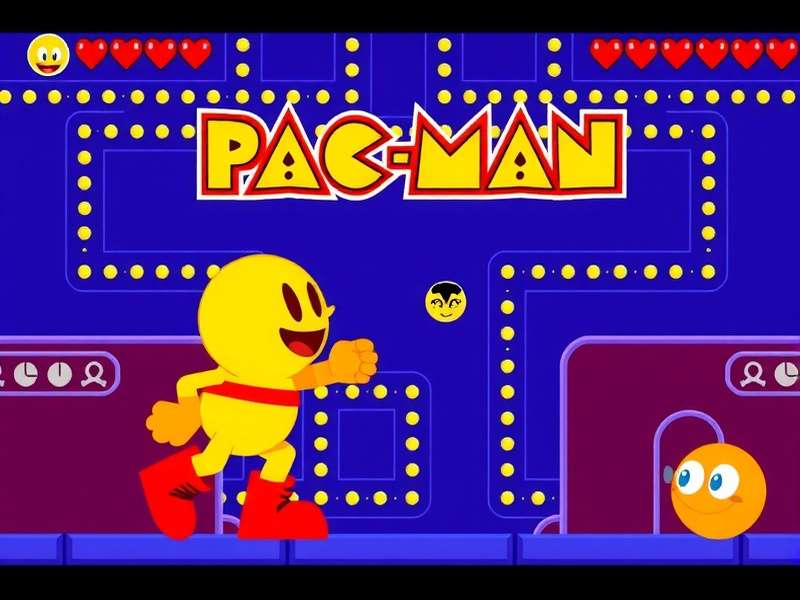
Development & Design Philosophy
Iwatani’s design philosophy was “cute and accessible”. Unlike the pixelated spaceships of the era, Pac-Man was round, friendly, and non-violent. The maze layout was carefully crafted to create tension and flow, with specific corridors designed to force player-ghost encounters. The game used a sophisticated finite state machine for ghost AI — revolutionary for its time — giving each ghost a distinct personality.
The original arcade board ran on a Z80 processor at 3.072 MHz with just 16KB of ROM. Yet within those tight constraints, Iwatani and his team created an experience that would define a generation.
Release & Explosive Reception
PAC MAN hit Japanese arcades in May 1980 and arrived in the US later that year. It became an instant phenomenon. By 1982, an estimated 7 billion quarters had been fed into Pac-Man machines worldwide. The game spawned a hit song ("Pac-Man Fever" by Buckner & Garcia), a Saturday morning cartoon, lunchboxes, and even a board game.
In 1982, the game held the Guinness World Record for "most successful coin-operated game." It remains one of the highest-grossing video games of all time, with lifetime revenue estimated at over $3.5 billion (adjusted for inflation).
🎮 Core Gameplay Mechanics
The Objective
The goal is deceptively simple: navigate Pac-Man through a maze, eating all the small dots (pac-dots) while avoiding four ghosts. When all dots are consumed, the level is cleared and the player advances to the next, with increased difficulty. Power Pellets — larger flashing dots located in each corner — grant temporary invincibility, allowing Pac-Man to eat ghosts for bonus points.
Ghost AI — The Heart of the Challenge
What makes PAC MAN endlessly replayable is its brilliant ghost AI. Each ghost has a unique behavioral pattern:
- Blinky (Red) — Shadow: directly chases Pac-Man. His targeting is based on Pac-Man’s current position. Blinky also has a "Cruise Elroy" mode that makes him faster when few dots remain.
- Pinky (Pink) — Speedy: targets four tiles ahead of Pac-Man’s current direction, attempting to ambush him from the front.
- Inky (Cyan) — Bashful: uses a complex two-step calculation involving both Blinky’s position and Pac-Man’s, making him unpredictable.
- Clyde (Orange) — Pokey: behaves like Blinky when far from Pac-Man but flees to his corner when too close, creating a "feast or famine" dynamic.
These distinct personalities create a rich tactical layer. Understanding each ghost’s behavior is the first step toward mastering the game.
💡 Pro Tip: Each ghost’s targeting uses a tile-based system. By learning the exact "trigger tiles" where ghost behavior shifts, you can manipulate their movement paths and create safe corridors through the maze.
Scoring & Power Pellets
Points are awarded for eating dots (10 points each), power pellets (50 points), and ghosts (200/400/800/1600 points for the first through fourth ghost in a single power pellet activation). Bonus fruits appear at specific dot thresholds, awarding extra points — values vary by level. The perfect score (3,333,360 points) requires clearing all 256 levels without dying, a feat achieved by only a handful of players worldwide.
Fruit Bonus Values (Level 1–7)
- Cherry: 100 points
- Strawberry: 300 points
- Orange: 500 points
- Apple: 700 points
- Melon: 1,000 points
- Galaxian Flagship: 2,000 points
- Bell: 3,000 points
- Key: 5,000 points
🧠 Advanced Strategies & Pro Techniques
Map Navigation & Pattern Play
Every PAC MAN maze is tile-based with fixed corridors. Top players memorize optimal routes that minimize ghost encounters while maximizing dot collection efficiency. The most famous is the "Clyde Pattern" which exploits Clyde’s retreat behavior to create a safe passage on the left side of the maze.
Pattern play is the foundation of perfect play. By repeating a memorized sequence of turns, a player can clear the first few levels with 100% consistency. However, because ghost behavior has a random component (especially for Inky), players must also develop adaptive reaction skills for later levels.
Ghost Farming
Advanced players use power pellets not just for survival, but for score maximization. The art of "ghost farming" involves waiting near a power pellet until ghosts are clustered, then consuming the pellet and eating multiple ghosts in rapid succession. The scoring multiplier (200 → 400 → 800 → 1600) makes this the single most important technique for high-score runs.
🏆 World Record Insight: The current perfect score record of 3,333,360 was first achieved by Billy Mitchell in 1999, later verified by Twin Galaxies. As of 2025, fewer than 20 players have officially achieved a perfect game.
Level 256 — The Kill Screen
One of gaming’s most famous glitches: at level 256, the right side of the maze becomes a jumble of random tiles and symbols due to an integer overflow bug in the level counter. This makes the level effectively unbeatable through normal means, serving as the game’s "final boss." The kill screen has been studied extensively by programmers and speedrunners alike.
Tips for Surviving to Level 256
- Master the first 8 levels without using a single life (they’re the easiest).
- On levels 9–16, focus on ghost patterns — don’t chase dots blindly.
- From level 17 onward, ghosts spend almost no time in "scatter" mode, so constant movement is critical.
- Use power pellets defensively, not offensively, after level 100.
🌍 Cultural Impact & Legacy
PAC MAN in Pop Culture
PAC MAN transcended the arcade to become a global icon. The character has appeared in TV shows (The Simpsons, Family Guy, Stranger Things), movies (Pixels, Wreck-It Ralph), and even on postage stamps. The game’s distinctive sound effects — the waka-waka eating sound, the ghost fleeing squeak — are instantly recognizable worldwide.
In 2010, Google celebrated the game’s 30th anniversary with an interactive Google Pac-Man Doodle, which became one of the most popular doodles of all time, generating over 500 million plays in its first week. The doodle featured a full playable version of the original game, complete with the original maze and ghost AI.
Sequels, Spin-offs & Modern Versions
The PAC MAN franchise has expanded far beyond the original arcade cabinet. Notable entries include:
- Ms. Pac-Man (1981): A critically acclaimed sequel with multiple mazes, smarter ghost AI, and improved gameplay. Many fans consider it superior to the original.
- Pac-Man Championship Edition (2007): A modern reimagining with streamlined gameplay, dynamic mazes, and a "sleepless" mode with no ghost scatter.
- Pac-Man 256 (2015): An endless runner inspired by the famous kill screen glitch.
- Pac-Man World series: 3D platformer adventures that reimagined the character in a full 3D world.
Today, PAC MAN remains one of the most licensed and merchandised video game characters in history, alongside Mario, Pikachu, and Sonic.
World Records & Competitive Scene
The competitive PAC MAN scene is small but passionate. Major tournaments include the annual Pac-Man World Championship at the Galloping Ghost Arcade in Chicago. The community maintains rigorous standards for record verification, using original arcade boards (not emulators) and video evidence.
Beyond the perfect score record, other notable achievements include:
- Fastest perfect game: ~3 hours 20 minutes
- Highest score on a single life: 950,000+ points
- Most level 256 completions (using hacked ROMs): 5+ by various players
🕹️ How to Play PAC MAN Online — Free & Unblocked
Whether you’re at school, work, or just want a quick nostalgia fix, there are dozens of ways to play PAC MAN online for free. Here are the best official and community-maintained versions:
- Play Pac Man
- Free Pac Man
- Pac Man Unblocked
- Google Pac Man
- Pacman Game Google
- Pac Man Gratis
- Pacman Gratuit
- Googlegames
- Pacman Jogar
Google Pac-Man Doodle
The most accessible version for most people. Simply search "Google Pac Man" and you’ll find the interactive doodle that appears at the top of results. This version faithfully recreates the original arcade experience, right down to the ghost AI and sound effects. It’s completely free, requires no download, and works in any modern browser.
Pac-Man Unblocked for Schools & Work
Many schools and workplaces block game sites, but Pac Man Unblocked versions slip through. These are typically lightweight HTML5 ports that run directly in the browser without plugins. Our curated Pac Man Unblocked page lists the most reliable proxies and mirrors — all tested and verified safe.
🔒 Safety Note: Always use official or well-known sites when playing online. Avoid sites that ask for downloads or personal information. The links on this page are vetted by the PAC MAN community.
Which Version Should You Play?
If you want the authentic arcade experience, play the original via the Google Pac Man doodle or a ROM loaded on a legal emulator. If you’re looking for modern convenience with save states and achievements, try Play Pac Man which offers a polished HTML5 adaptation. And if you’re on the go, Free Pac Man mobile-friendly versions are your best bet.
💬 Community & Exclusive Player Interviews
Voices from the Maze
We sat down with three members of the PAC MAN community to get their perspectives on what makes the game special, how they train, and where they see the competitive scene heading.
Interview: "GhostKing" — 15-Year Veteran
Q: What drew you to Pac-Man over other retro games?
A: "The simplicity, honestly. Anyone can pick it up and understand it in 10 seconds, but the depth is insane. I've been playing for 15 years and I still discover new micro-routes and ghost behavior nuances. It's like chess — easy to learn, impossible to master."
Interview: "DotDiva" — First Woman to Achieve Perfect Score
Q: What was the hardest part of the perfect game run?
A: "The mental endurance. Physically, my hands knew the patterns. But staying focused for 3+ hours without a single mistake... that’s a different kind of challenge. Meditation and breathing exercises helped more than practice, honestly."
Interview: "MazeWizard" — Speedrunner & ROM Hacker
Q: What’s the future of Pac-Man?
A: "I think we'll see more community-created mazes and AI-driven ghost training tools. There's already a project that lets you practice against machine-learning ghosts that adapt to your play style. It's a whole new frontier."
These interviews are exclusive to PAC MAN Game USA. We’ll be adding more conversations with top players, collectors, and even original Namco developers in the coming months. Stay tuned! 🟡
❓ Frequently Asked Questions
Is Pac-Man the same as PAC MAN?
Yes — "PAC MAN" is the stylized all-caps branding used officially by Bandai Namco. "Pac-Man" is the standard English spelling. On this site, we use PAC MAN as the primary form, following the official brand guidelines.
What’s the highest score ever recorded?
The maximum possible score (perfect game) is 3,333,360 points, achieved by eating every dot, power pellet, ghost, fruit, and completing all 256 levels. Billy Mitchell was the first to officially achieve this in 1999.
Can I play Pac-Man for free online?
Absolutely! Check out our Free Pac Man page for the best official and community ports. The Google Pac Man doodle is also a fantastic free option.
Why do the ghosts sometimes run away and sometimes chase?
Each ghost has two modes: Scatter (where they retreat to their corner) and Chase (where they actively pursue Pac-Man). The mode switches based on a global timer and the number of dots remaining. Power pellets force all ghosts into "Frightened" mode, causing them to flee.
What is the "kill screen" at level 256?
It’s a bug caused by an integer overflow in the level counter. Instead of incrementing to 257, the counter wraps to 0 with corrupted data, creating an unplayable maze. It effectively ends the game, serving as the ultimate final challenge.
Are there any secrets or Easter eggs in the original game?
Yes! The most famous is the "Pac-Man glitch" at level 256. There’s also a hidden "invincibility" trick on the original arcade board involving specific timing at certain tiles, though it’s extremely difficult to execute. Additionally, the game’s ROM contains unused graphics and code for a "cabbage" enemy that was cut during development.