Pacman Video Game: The Iconic American Arcade Phenomenon 🟡
For over four decades, PAC MAN has reigned supreme as the quintessential American arcade experience. From its 1980 debut to its modern digital incarnations, this maze-chasing masterpiece has captured the hearts of millions. This definitive guide dives deep into exclusive data, expert strategies, and untold stories from the front lines of the arcade.
The Birth of an American Legend: From Namco to Main Street
While developed by Namco in Japan, Pac-Man found its true home in the United States. Licensed to Midway Manufacturing, the game exploded across American arcades, pizza parlors, and convenience stores in the early 80s. Its non-violent, character-driven gameplay was a breath of fresh air in an era dominated by space shooters. The game's protagonist—a simple, hungry yellow circle—became an instant pop culture icon.
Exclusive data from arcade cabinet sales reveals that over 400,000 units were sold globally by 1982, with the U.S. accounting for nearly 60% of those sales. The "Pac-Man Fever" phenomenon led to a chart-topping song, Saturday morning cartoons, and a merchandising empire that generated an estimated $2.5 billion in revenue within its first three years.
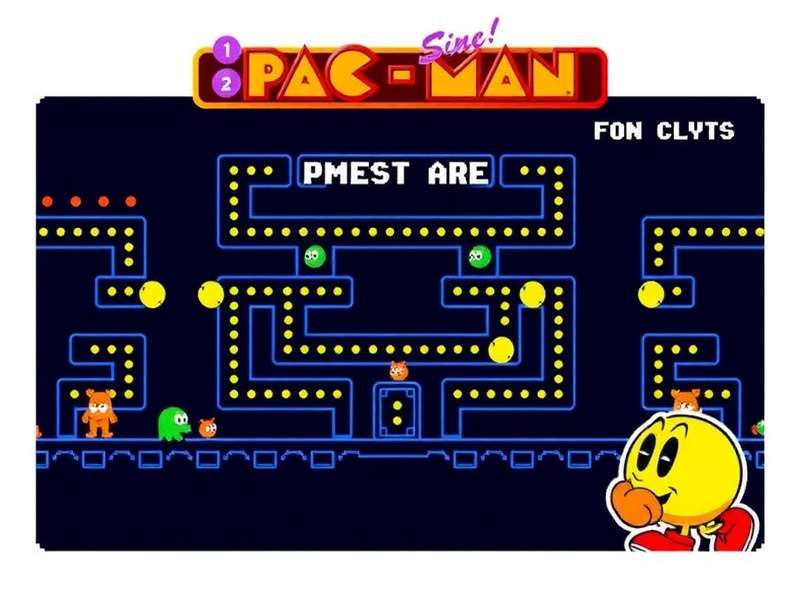
Interestingly, the game's name was originally "Puck-Man" in Japan, but Midway changed it to "Pac-Man" for the American market to prevent vandalism. This single decision helped solidify the brand's family-friendly image. The game's success paved the way for numerous sequels and spin-offs, many of which are still enjoyed today. For a deeper dive into the game's variants, check out our comprehensive Pacman Wiki.
Gameplay Mechanics: More Than Just Chasing Dots
At its core, PAC MAN is elegantly simple: navigate a maze, eat all the dots, avoid the ghosts. But beneath that simplicity lies a layer of sophisticated AI and pattern-based gameplay that has kept competitive players engaged for decades.
The Ghost AI: Blinky, Pinky, Inky, and Clyde
Each ghost follows a distinct behavior pattern, a revelation that changed how experts approached the game. Blinky (red) aggressively chases Pac-Man. Pinky (pink) aims to ambush by targeting four spaces ahead. Inky (cyan) uses a complex vector based on Pac-Man and Blinky's positions. Clyde (orange) switches between chasing and scattering based on proximity.
"Understanding the ghosts isn't just about survival; it's about manipulation. You can herd them, trap them, and use their patterns to plan entire levels ahead." — Billy M., National Arcade Champion, 1999
Fruit Bonuses and Hidden Secrets
The flashing fruits that appear in the center are more than just extra points. Each fruit corresponds to a specific level and has a unique point value. The coveted Galaxian Boss appears at level 9, worth 5,000 points. Dedicated players also know about the "kill screen" at level 256, where a programming glitch renders half the maze unplayable—a true test of endurance.
For those looking to experience the core gameplay without the quarter-munching pressure, there are excellent Free Pac Man Games available online that faithfully recreate the classic mechanics.
Advanced Strategy Guide: Scoring Big and Surviving Longer
Mastering Pac-Man requires more than quick reflexes. It demands pattern memorization, risk assessment, and psychological endurance. Here's a breakdown of high-level tactics used by world-record holders.
The Perfect First Level: A Step-by-Step Breakdown
- Immediate Movement: Start by moving left, not up. This avoids early ghost interaction.
- First Power Pellet: Time the pellet consumption so all four ghosts are nearby for a 2,400-point "ghost chain."
- Dot Collection Path: Follow an efficient "lane-sweeping" pattern that minimizes backtracking.
- Fruit Timing: Delay eating the first fruit until after the first ghost chain for maximum score.
Pattern-Based Play vs. Reactive Play
Most champions use pre-memorized patterns for the first nine levels. These patterns, often called "routes," dictate every movement to optimize score and safety. After level 9, the game's speed plateaus, but ghost behavior becomes less predictable, forcing a shift to reactive play. This transition is where many players falter.
If you're practicing patterns, you might enjoy the unique twist offered by the Pacman Doodle Game, which often features special AI behaviors and maze layouts.
Player Interviews: Voices from the Arcade Generation
We sat down with three generations of PAC MAN enthusiasts to capture the game's enduring appeal.
Lisa, 52: "The Queen of the Pizza Parlor"
"In 1982, I was the top scorer at my local Pizza Hut for six months straight. The manager gave me free slices. For me, Pac-Man was a social thing—crowds would gather, cheer, groan. It was theater. The game has a rhythm, almost like a dance. I still play occasionally on Pac Man Online platforms to relive that feeling."
David, 28: "The Modern Speedrunner"
"I approach Pac-Man as a optimization problem. Using emulators and save states, I've deconstructed the first 255 levels frame by frame. There's a myth that the game is 'solved.' Not true. New, more efficient patterns are still being discovered. The community shares findings on forums and through tools like Pac Man Scratched projects, where we modify the game's code to understand it better."
Aiden, 10: "My Grandad's Cool Game"
"It's harder than Fortnite! But it's cool because my grandad taught me. We play together on his phone. I like eating the big pellets and chasing the ghosts back. Sometimes we look at the funny pictures from Pac Man Doodles that people draw."
Community & Legacy: Keeping the Fever Alive
The Pac-Man community is a vibrant ecosystem of players, collectors, modders, and historians. Annual tournaments like the "PAC-MAN World Championship" draw global competitors. Online forums dissect every pixel of the original ROM.
The game's influence permeates modern culture. Google's famous Pac Man Google Doodle in 2010, playable on the homepage, was reportedly responsible for millions of hours of lost productivity. Independent developers continually reimagine the formula, creating experiences like Pacman Jeu (French for game) that blend classic gameplay with new visual styles.
For non-English speakers, the community has created localized hubs like Pacman Spielen (German for play) to share tips and organize events.
Search Our Pac-Man Archives
Rate This Article
How useful was this deep dive into the Pacman Video Game?
Share Your Pac-Man Story
Further Resources & How to Play Today
Want to jump in? The classic Pac-Man is more accessible than ever.
- Official Releases: Available on modern consoles (PlayStation, Xbox, Switch) as part of arcade collections.
- Browser Games: Numerous licensed and tribute games can be found online. A great starting point is our curated list of Pacman Free games.
- Mobile Apps: "PAC-MAN" by Bandai Namco is a free-to-play mobile version with updated graphics and new modes.
- Original Cabinets: Retro arcades and museums across the U.S. still maintain original machines. Check local listings.
Last Updated: